
 Open on Saturdays too
Gap between your teeth: closing a diastema

Some people find a gap between the teeth charming, others experience it as annoying. A so-called diastema is an open space between two or more teeth. Between the two front teeth in the upper jaw is where a diastema occurs most often.
The cause is often genetic, for instance when children get their mother's teeth but their father's jaw arch, or the other way round. The teeth can then be too small for the arch they sit in. A diastema can also develop if you often tend to push your tongue outwards when swallowing food. You then repeatedly put unnecessary pressure on the teeth, which can create a gap or lead to bone loss through gum inflammation.
Clear aligners are the ideal answer for diastemas
How can diastemas be treated?
Do you have such a diastema, does this small imperfection bother you and would you like something done about it? Then you can choose to use veneers. These are small pieces of porcelain or composite applied to the outside of your teeth. That way the gap between your teeth is filled. The disadvantage is that you may have to have them reapplied regularly.
Crowns or bridges can also be placed to hide the diastema, as it were. When a crown is placed, a cap of metal or porcelain is glued over a filed-down tooth. This gives the tooth the desired shape and size to fill the gap. The same applies to a bridge, only then for several teeth. A disadvantage is that crowns and bridges can come loose.
A costly and even more invasive treatment of a diastema is the replacement of one or more teeth by implants. These options are only possible for adults.
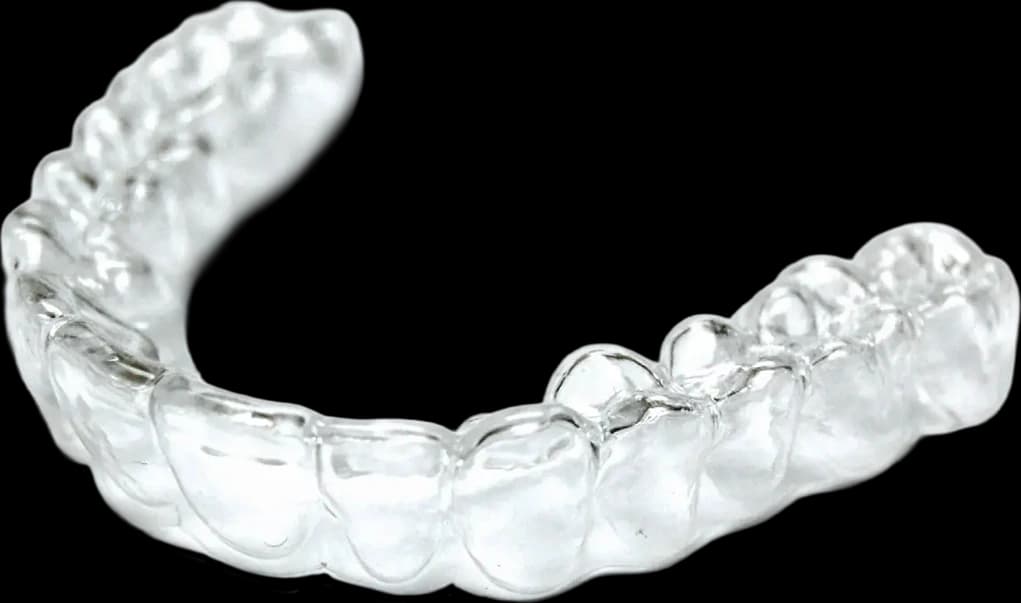
You can of course also choose a more durable treatment that does less damage to your teeth, namely the orthodontic treatment. Choosing clear Invisalign aligners is the best solution for getting a nicely straight set of teeth without gaps.
It is also possible for a diastema to develop over time because of an overly prominent lip frenulum, the tissue between the inner lip and the gum where the front teeth sit. If that is the case, a small surgical procedure is needed. Another cause is the absence or partial absence of teeth. Secondary causes have more to do with misalignments in the mouth, such as overlaps or protruding teeth. A gap between the teeth or diastema can therefore have several causes and lead to gum problems and ultimately to tooth loss. Depending on the cause of your diastema, a treatment plan is drawn up by a dentist or orthodontist.
Treating diastemas with Invisalign
With the clear Invisalign aligners the position of the teeth in your mouth is corrected in a painless way. To be able to make an analysis, a treatment plan and an estimate, the practitioner needs photos, X-rays and digital scans. These are used to create a tailored 3D treatment plan for your teeth. From that it can be seen precisely where movements are needed to close the gap between your teeth. Through the 3D treatment film you get a direct picture of how your teeth will move, of the end result and of how long you will need for it. The duration also depends on whether the aligners are worn enough. And with children the changing of teeth and growth play a part as well. Once you agree with the treatment plan, the custom-made clear aligners are ordered and can be fitted. You take home the required series of ultra-thin, clear aligners. The idea is that you wear the aligners at least 22 hours a day, in order to reach a good result. Only for eating and brushing is it important to remove them.
You replace these aligners yourself with a new set every two weeks. Each time you slide a new aligner over your teeth, your teeth will gradually shift towards the desired position. Every time you will also feel the aligner pushing the teeth in the right direction. After only a few weeks you will see that your diastema is closing. The advantage of this is that you can do a large part yourself and therefore do not have to come in for check-ups as often. During the check-up appointments, which take place roughly every three months, the state and the progress of your teeth are reviewed. At the final check-up we look at whether the diastema has closed nicely and whether you are happy with the result. If so, the final position is stabilised for three months and after that you will be given a night retainer. It is important that the teeth settle firmly into their correct position.
No appointment needed
Send a selfie of your teeth and get advice right away
Wondering whether Invisalign works for you? Send a photo of your teeth by WhatsApp or e-mail. One of our practitioners will answer you personally, before you even come in.

What is the result of treating a diastema with Invisalign?
After wearing the clear Invisalign aligners day and night you have a straight and radiant set of teeth without gaps. The result does not only have a positive effect on the health of your mouth. Your attractive, radiant smile also has a positive effect on your confidence. Would you like to have the gap between your teeth resolved as well? Get in touch with us, no strings attached.
How your treatment works
Four steps, from the first conversation to the final check. You know beforehand how long it takes and what it costs.
What does Invisalign cost?- 1
Intake
A first conversation in which the practitioner assesses your situation. You hear what is possible, how long it takes and what it costs.
- 2
Photos and scans
We take photos and scans for your treatment plan. A 3D video shows you in advance how your teeth move into a straight arch.
- 3
Fitting
The aligners are made to measure. You take the whole series home and change them yourself every week.
- 4
Final check
Finished your last set of aligners? Then we see you for the final check. And then you smile.

A confident smile, sooner than you think
Book a first consultation, or send us a selfie first. Either is fine.